









Running a business in India is not only about making products and selling them. It is also about taking care of the environment. The Government of India has implemented rules to prevent waste generated by businesses from harming the environment. One of the most important rules is called EPR Authorisation.
What is EPR Authorisation?
EPR means Extended Producer Responsibility. If you manufacture, sell, or import a product into India, you are also responsible for what happens to that product after it is discarded.
EPR Authorisation is an official approval given by the Pollution Control Board that allows a company to legally collect, recycle, or manage waste created by its products.
This rule mostly applies to:
- Plastic waste
- E-waste (electronic waste)
- Battery waste
- Tyre waste
- Packaging waste
Who Needs EPR Authorisation in India?
You need EPR Authorisation if you are:
- Producer: A company that makes products or packaging in India.
- Importer: A business that brings products or packaged goods into India from other countries.
- Brand Owner: A company that sells products under its own brand name, even if it does not manufacture them.
If you fall into any of these categories, you are called a PIBO, and EPR Authorisation is mandatory.
Why is EPR Authorisation Important?
EPR Authorisation is important because:
- It reduces pollution
- It helps in recycling waste
- It protects soil, water, and air
- It keeps businesses legally safe
- It avoids heavy penalties and notices
Without EPR Authorisation, your business can face:
- Fines
- Business shutdown
- Legal notices from Pollution Control Boards
What Types of Waste Are Covered Under EPR?
EPR rules cover many types of waste, such as:
- Plastic packaging waste
- Electrical and electronic waste
- Used batteries
- Scrap tyres
- Multi-layer packaging
Along with EPR, businesses dealing with dangerous waste also need other approvals.
Hazardous Waste Management Business Authorisation
Some wastes are harmful to humans and nature. These are called hazardous wastes.
Examples include:
- Chemical waste
- Industrial sludge
- Toxic residues
- Used oils and solvents
If your business handles such waste, you must obtain Hazardous Waste Management Business Authorisation from the State Pollution Control Board.
This authorisation allows you to:
- Collect hazardous waste
- Store it safely
- Transport it legally
- Treat or dispose of it correctly
Without this authorisation, handling hazardous waste is illegal.
Legacy Waste Management Business Authorisation
Legacy waste means old waste that has been lying in landfills or dump yards for many years.
Examples:
- Old municipal waste
- Unprocessed landfill waste
- Historical dump site waste
Businesses that want to work in cleaning or processing old waste must get Legacy Waste Management Business Authorisation.
This authorisation is required for:
- Bio-mining projects
- Bio-remediation
- Landfill reclamation work
It ensures that old waste is treated safely without harming the environment.
Consent for Establishment (CFE): First Step for Compliance
Before starting any manufacturing or waste-related business, you must get Consent for Establishment (CFE).
Consent for Establishment means:
Permission from the Pollution Control Board to set up your unit or plant.
CFE is required:
- Before land purchase or construction
- Before installing machinery
- Before starting any industrial activity
For guest post submissions, CFE is a crucial compliance topic because:
- It is the first legal approval
- Without CFE, further permissions are not possible
- It applies to manufacturing, recycling, and waste management businesses
Step-by-Step Process for EPR Authorisation
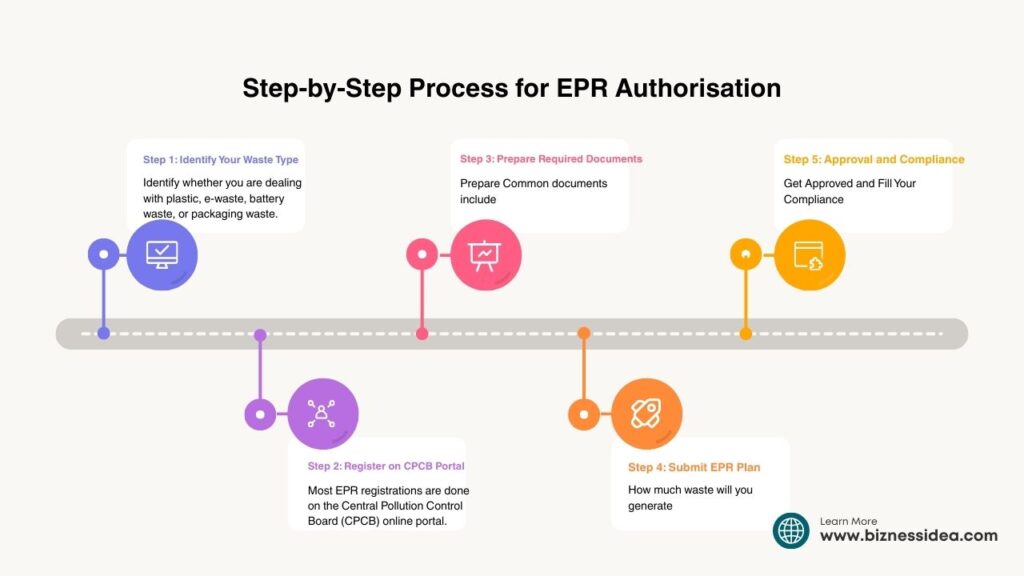
Here is a simple explanation of how to get EPR Authorisation:
Step 1: Identify Your Waste Type: Identify whether you are dealing with plastic, e-waste, battery waste, or packaging waste.
Step 2: Register on CPCB Portal: Most EPR registrations are done on the Central Pollution Control Board (CPCB) online portal.
Step 3: Prepare Required Documents: Common documents include:
- Company registration certificate
- GST certificate
- PAN card
- Product details
- Waste generation details
- Agreement with recyclers
Step 4: Submit EPR Plan: An EPR plan explains:
- How much waste will you generate
- How will you collect it
- How it will be recycled or disposed of
Step 5: Approval and Compliance: Once approved, you must:
- Meet recycling targets
- File annual returns
- Maintain records
Common Mistakes Businesses Make
Many businesses face rejection because of:
- Wrong waste calculation
- Incomplete documents
- No tie-up with authorised recyclers
- Ignoring annual compliance reports
Professional guidance helps avoid these mistakes.
Benefits of Proper EPR Compliance
When you follow EPR rules correctly:
- Your business becomes legally secure
- You gain brand trust
- You avoid penalties
- You support environmental protection
You stay ready for audits.
Conclusion
EPR Authorisation in India is not just a legal rule. It is a responsibility towards nature and future generations. When Producers, Importers, and Brand Owners manage their waste properly, India becomes cleaner and safer.
Along with EPR Authorisation, businesses must also understand:
- Hazardous Waste Management Business Authorisation
- Legacy Waste Management Business Authorisation
- Consent for Establishment
Following these rules early helps businesses grow without legal trouble.
FAQs
Que 1. Is EPR Authorisation mandatory in India?
Ans. it is mandatory for Producers, Importers, and Brand Owners dealing with regulated products.
Que 2. Who issues EPR Authorisation?
Ans. EPR Authorisation is issued by the Central Pollution Control Board (CPCB) or State Pollution Control Boards.
Que 3. Can a small business apply for EPR Authorisation?
Ans. Yes, company size does not matter. Even small businesses must comply.
Que 4. What happens if EPR targets are not met?
The business may face penalties, environmental compensation, or suspension of approval.
Que 5. Is Hazardous Waste Management Business Authorisation different from EPR?
Ans. Yes. EPR focuses on post-consumer waste, while hazardous waste authorisation is for dangerous industrial waste.
Que 6. What is Legacy Waste Management Business Authorisation used for?
Ans. It is required for companies working on old landfill or dump site waste treatment projects.
Que 7. Is Consent for Establishment required before EPR?
Ans. Yes. Consent for Establishment is usually required before starting operations and applying for other approvals.