









Managing a business is not only about earning revenue—it is also about controlling expenses and reporting them correctly. Many small business owners and startups in India struggle with this part. They either forget to track expenses or record them incorrectly. As a result, they face problems during tax filing, audits, or even penalties.
That’s why learning how to record business expenses properly is extremely important. When you maintain accurate records, you not only stay compliant with tax laws but also reduce your tax liability legally.
In this detailed guide, you will understand what are business expenses for taxes, how they affect your tax calculation, and most importantly, how to record business expenses for taxes step by step. You will also learn how to categorize expenses, identify allowable deductions, and avoid common mistakes.
Let’s start with the basics.
What Are Business Expenses for Taxes in India?
Before you start recording anything, you need to understand what qualifies as a business expense. In simple terms, business expenses are costs incurred while running your business. These expenses are necessary to operate, generate revenue, and maintain your business activities.
For tax purposes in India, only certain expenses are allowed as deductions under the Income Tax Act. These are known as allowable business expenses in India. They reduce your taxable income, which ultimately lowers the amount of tax you pay.
Firstly, a business expense must be directly related to your business. For example, rent for your office, employee salaries, and internet bills are valid expenses. However, personal expenses like your family shopping or personal travel cannot be claimed.
Secondly, the expense must be genuine and properly documented. If you cannot prove it with bills or invoices, it may be disallowed during tax assessment.
Examples of Business Expenses:
- Office rent and utilities
- Salaries and wages
- Marketing and advertising costs
- Travel expenses for business
- Software subscriptions
Additionally, understanding the difference between capital expenses and revenue expenses is important. Capital expenses (like buying machinery) are not fully deducted in one year but are depreciated over time.
Knowing what qualifies as a business expense is the first step toward proper tax filing.
How Do Business Expenses Affect Taxes?
Understanding how do business expenses affect taxes helps you see why proper recording matters so much.
When you run a business, your taxable income is calculated as:
Total Income – Business Expenses = Taxable Profit
This means the more legitimate expenses you record, the lower your taxable profit becomes. As a result, your tax liability reduces.
However, this does not mean you can claim anything as an expense. Tax authorities in India carefully review expense claims. If they find incorrect or inflated expenses, penalties may be applied.
Example:
| Particulars | Amount (INR) |
| Total Income | ₹10,00,000 |
| Expenses | ₹6,00,000 |
| Taxable Income | ₹4,00,000 |
In this case, proper expense tracking reduces taxable income significantly.
Moreover, accurate expense records help in financial planning. You can analyse where your money is going and make better business decisions.
Additionally, during audits or funding processes, well-maintained records build trust. Investors and auditors prefer businesses with clear financial documentation.
Therefore, recording expenses is not just about saving tax—it is about running your business professionally.
How to Record Business Expenses for Taxes (Step-by-Step Process)
Now, let’s understand how to record business expenses for taxes practically.
Firstly, you need a system. You can use accounting software, spreadsheets, or even a notebook. However, digital tools are recommended for accuracy and ease.
- Open a Separate Business Account: Keep your business and personal finances separate. This avoids confusion.
- Record Expenses Daily: Do not wait till the end of the month. Record expenses as they happen.
- Keep All Receipts and Bills: Every expense should have proof.
- Categorize Expenses: Group expenses into categories like rent, salary, marketing, etc.
- Use Accounting Software: Tools like Tally, Zoho Books, or QuickBooks simplify tracking.
- Reconcile Monthly: Match your records with bank statements.
- Review Before Tax Filing: Check for errors and missing entries.
Simple Expense Recording Table:
| Date | Category | Description | Amount |
| 10 Jan | Rent | Office rent | ₹20,000 |
| 12 Jan | Marketing | Facebook ads | ₹5,000 |
Consistency is the key. Even small expenses matter.
How to Categorize Business Expenses for Taxes
Proper categorisation makes tax filing easier. It also helps you analyse spending patterns.
Common Expense Categories:
- Rent and utilities
- Salaries and wages
- Marketing and advertising
- Travel and transport
- Office supplies
- Professional fees
Additionally, categorisation helps in identifying tax deductions quickly.
Tips:
- Use standard categories
- Avoid mixing personal expenses
- Keep categories consistent
List of Business Expenses for Taxes in India
Here is a practical list of business expenses for taxes in India:
- Office rent
- Electricity and the internet
- Employee salaries
- Advertising expenses
- Business travel
- Software and tools
- Legal and professional fees
These are commonly allowed expenses.
Allowable Business Expenses in India
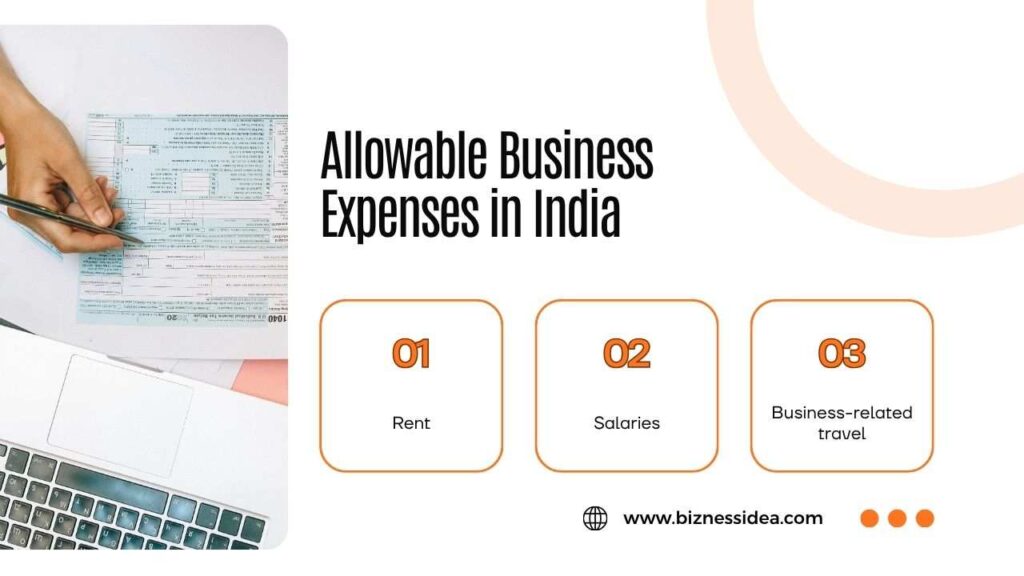
Examples:
- Rent
- Salaries
- Business-related travel
- Depreciation on assets
These reduce taxable income.
List of Disallowed Expenses in Business
Not all expenses are allowed.
Disallowed Expenses:
- Personal expenses
- Income tax paid
- Penalties and fines
- Cash payments above limits
Avoid claiming these.
Common Mistakes to Avoid While Recording Expenses
Mistakes:
- Mixing personal and business expenses
- Not keeping receipts
- Recording expenses late
Solutions:
- Stay organized
- Use software
- Review regularly
Best Tools to Record Business Expenses in India
Popular Tools:
- Tally
- Zoho Books
- QuickBooks
These tools simplify accounting.
Tips for Accurate Expense Tracking
- Record daily
- Keep digital copies
- Review monthly
Consistency improves accuracy.
Conclusion
Recording business expenses properly is not complicated, but it requires discipline. When you track every expense, categorize it correctly, and maintain proper records, tax filing becomes simple and stress-free.
More importantly, you avoid penalties and save money legally. So, start building good habits today. A well-managed expense system is the foundation of a successful business.
FAQs
Que 1. What are business expenses for taxes?
Ans. They are costs incurred to run a business and are deductible.
Que 2. How to record business expenses for taxes?
Ans. Track daily, keep receipts, and use accounting tools.
Que 3. How do expenses affect taxes?
Ans. They reduce taxable income.
Que 4. What are allowable business expenses in India?
Ans. Expenses directly related to business operations.
Que 5. What expenses are disallowed?
Ans. Personal expenses, penalties, and income tax.