









If you are searching for practical Home Automation Project Ideas, you are in the right place. With ESP8266 and NodeMCU, you can build smart systems at a very low cost. Moreover, these WiFi-enabled microcontrollers make IoT projects simple and affordable.
Today, smart homes are not limited to luxury villas. In fact, students, hobbyists, and engineering learners are building their own home automation system project with source code using compact boards like the ESP8266. As a result, learning IoT has become easier than ever.
In this guide, you will discover beginner to advanced Home Automation Project Ideas. Additionally, you will understand how these projects compare with a home automation project using Arduino and even a home automation project using ESP32.
Let’s get started.
Why Home Automation Project Ideas Are Perfect for ESP8266 & NodeMCU
When it comes to IoT development, ESP8266 and NodeMCU are excellent choices. First of all, they come with built-in WiFi. Therefore, you don’t need an external WiFi module as you do with Arduino.
Unlike a traditional home automation project using Arduino, ESP8266 connects directly to your router. As a result, real-time control through a smartphone or web app becomes easy.
Here’s why these boards are ideal:
- Low cost (budget-friendly for students)
- Built-in WiFi support
- Compatible with Arduino IDE
- Large online community support
- Easy integration with mobile apps
Moreover, many ready-made tutorials provide a home automation system project with source code. Consequently, beginners can start quickly without struggling with complex networking concepts.
If you want better processing power, you can explore a home automation project using ESP32 later. However, ESP8266 is more than enough for most beginner and intermediate projects.
Now, let’s explore the best project ideas.
Home Automation Project Ideas for Beginners
If you are just starting, these beginner-friendly Home Automation Project Ideas will help you build confidence.
1. Smart Light Control System – Home Automation Project Ideas
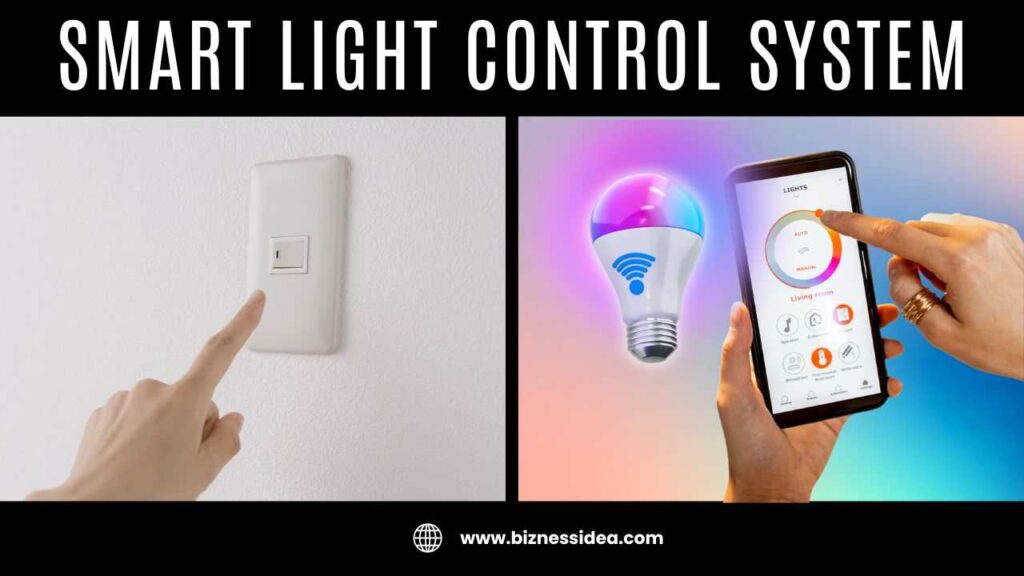
This is the most popular home automation project model for students. In this system, lights are controlled using a smartphone app or web server.
Components needed:
- NodeMCU (ESP8266)
- Relay module
- Bulb
- Power supply
How it works:
The NodeMCU connects to WiFi. Then, it hosts a web server. When a button is clicked on the web page, the relay switches ON or OFF.
Why this project is great:
- Simple logic
- Easy wiring
- Perfect for exhibitions
- Available with source code online
Moreover, you can modify it later to add voice control using Google Assistant.
2. Smart Fan Control – Home Automation Project Ideas
Another useful project is a smart fan controller. Here, you can control fan speed remotely.
This project teaches:
- PWM control
- Relay switching
- Web-based control systems
Compared to a home automation project using Arduino, ESP8266 simplifies WiFi communication. Therefore, you avoid extra modules and wiring complexity.
Additionally, this project can be expanded into a full room automation model.
3. WiFi-Based Door Lock System
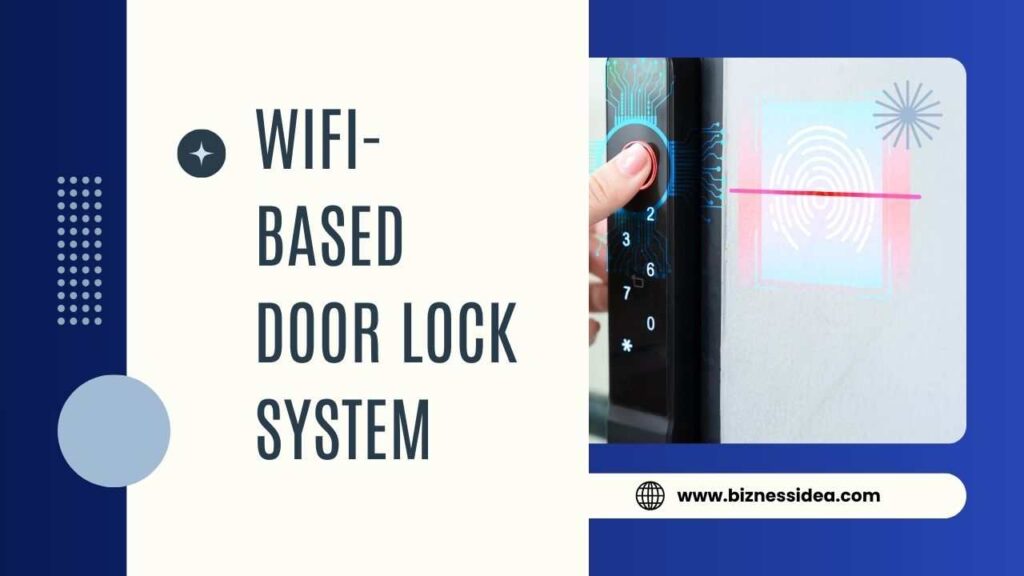
Security projects are always impressive. In this system, a solenoid lock is controlled through a mobile app.
Features:
- Password-protected access
- Remote unlocking
- Activity logging
Furthermore, you can integrate this with fingerprint sensors later. While ESP8266 handles the WiFi, external modules manage locking mechanisms.
If you need better encryption and Bluetooth features, a home automation project using ESP32 might be a better upgrade.
Intermediate Home Automation Project Ideas Using ESP8266
Once you master basics, you can move toward more advanced Home Automation Project Ideas.
4. Smart Home Automation System Project with Source Code
This is a complete home automation system project with source code. It controls:
- Lights
- Fans
- Appliances
- Door locks
In addition, you can monitor device status in real time.
Project architecture:
- ESP8266 as controller
- Relays for switching
- Web dashboard
- Optional mobile app
Because open-source code is available, customisation becomes easy. Therefore, you can add new modules at any time.
5. IoT-Based Energy Monitoring
Energy monitoring projects are practical and impressive.
What it does:
- Tracks electricity usage
- Displays data on the web dashboard
- Sends alerts for high consumption
Benefits:
- Saves electricity
- Adds smart analytics
- Useful for real-world applications
Compared to simple models, this project significantly enhances your understanding of IoT.
6. Voice-Controlled Home Automation Project Ideas
Voice control makes projects futuristic. Here, devices are controlled through:
- Google Assistant
- Alexa
- Custom voice apps
ESP8266 connects to cloud services. When a voice command is given, the device responds accordingly.
Although it requires API integration, many tutorials provide ready-made source code. Therefore, implementation becomes manageable.
Advanced Home Automation Project Ideas with ESP8266 & ESP32
If you want to build industry-level projects, consider these advanced Home Automation Project Ideas.
7. Smart Home Automation Project Model with Mobile App
Instead of using a web server, you can build a mobile app using:
- Blynk
- MIT App Inventor
- Flutter
This home automation project model looks professional. Moreover, it is perfect for final-year engineering submissions.
Features include:
- Device scheduling
- Push notifications
- Energy tracking
- Real-time monitoring
If you need Bluetooth and dual-core processing, you can switch to a home automation project using ESP32.
8. AI-Based Smart Automation System
This advanced system uses sensors to automate actions.
Examples:
- Lights turn ON when motion is detected
- AC adjusts temperature automatically
- Security alert sent if unusual movement is detected
While ESP8266 handles WiFi communication, AI logic can be integrated via cloud platforms.
As a result, this project demonstrates real-world IoT intelligence.
Comparison Table: Arduino vs ESP8266 vs ESP32 for Home Automation Project Ideas
| Feature | Arduino | ESP8266 | ESP32 |
| WiFi Built-in | No | Yes | Yes |
| Cost | Medium | Low | Medium |
| Bluetooth | No | No | Yes |
| Processing Power | Basic | Moderate | High |
| Best For | Basic electronics | IoT projects | Advanced IoT |
Clearly, ESP8266 offers the best balance between cost and functionality. However, ESP32 is better for complex applications.
Components Required for Home Automation Project Ideas
Here is a basic component list:
- NodeMCU (ESP8266)
- Relay module
- Jumper wires
- Breadboard
- Power supply
- Sensors (optional)
Estimated cost: ₹800–₹2,500 depending on features.
Therefore, these projects are affordable for students.
Conclusion
Home Automation Project Ideas using ESP8266 and NodeMCU are practical, affordable, and future-ready. Whether you are a student, hobbyist, or engineering learner, these projects help you understand IoT fundamentals clearly.
Start simple. Then, upgrade gradually. As you gain experience, you can move toward ESP32-based systems and advanced AI automation.
With the right components and source code, your smart home project can become reality faster than you think.
FAQs
Que 1. What are the best Home Automation Project Ideas for beginners?
Ans. Smart light control and fan automation are the easiest beginner-friendly Home Automation Project Ideas.
Que 2. Is ESP8266 better than Arduino for home automation project using Arduino?
Ans. Yes. ESP8266 has built-in WiFi, which makes IoT implementation simpler than Arduino.
Que 3. Can I get home automation system project with source code?
Ans. Yes. Many open-source platforms provide ready-made code that you can modify easily.
Que 4. Is ESP32 better for home automation project using ESP32?
Ans. ESP32 is better for advanced projects because it offers Bluetooth and higher processing power.
Que 5. What is the cost of a basic home automation project model?
Ans. A simple project can cost between ₹800 and ₹2,500, depending on components.